Need septic tank pumping in Lee's Summit?
Use the request form to describe what you are seeing. A local provider can follow up with questions and a written quote. No obligation.
No obligation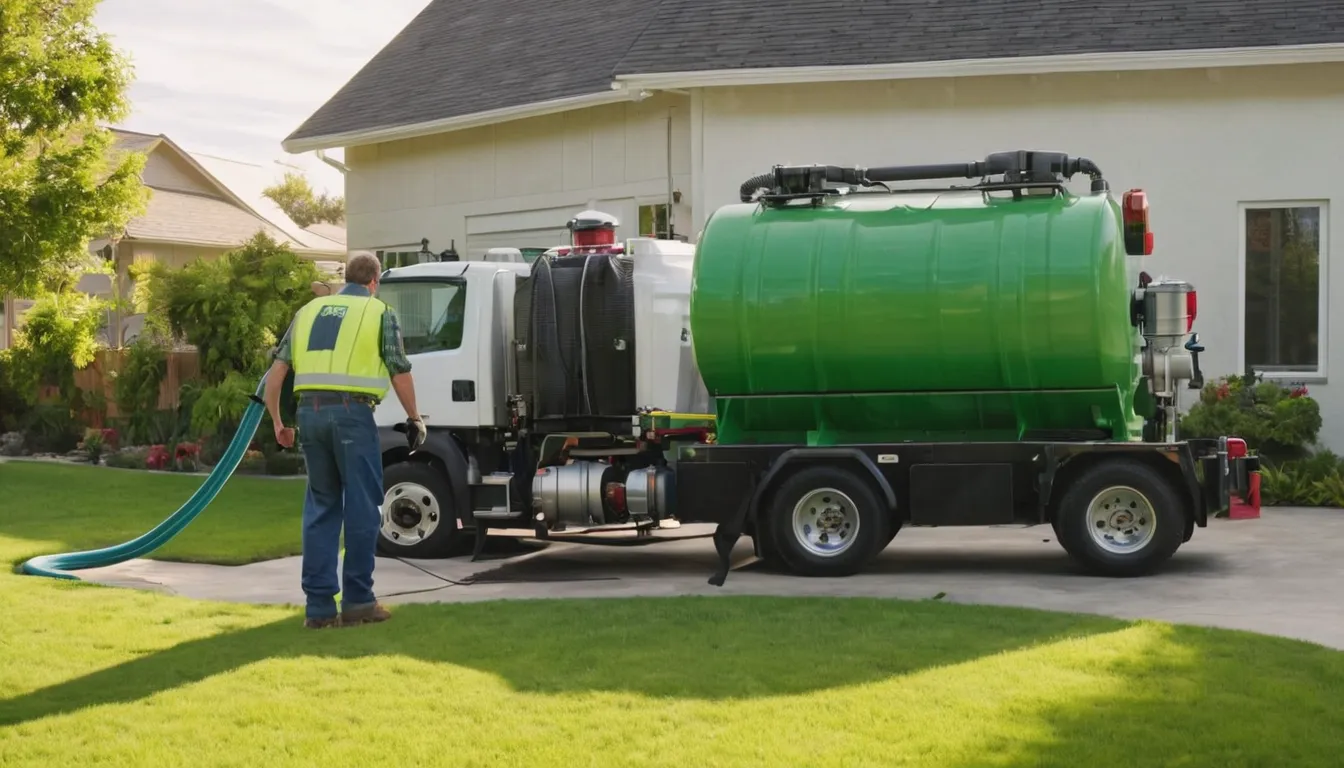
A lot of people think a full septic tank is just a slow drain they can ignore. In practice, the tank keeps filling with every shower and every load of laundry. Solids settle, the liquid layer rises, and the tank runs out of room.
Septic tank pumping clears out that built-up sludge and scum so the system can work again. Enteredsending Septic is a referral service. We do not pump tanks. We connect you with an independent local provider in our network who does the work. On this page you will find a clear timeline, what a visit looks like, typical costs, and the questions worth asking.
A lot of people think a full tank just means slow drains. In practice, it means the clock has already started. Gurgling pipes, slow drains in more than one room, or a sewage smell near the tank are all signs to act.
Here is what you can safely do in the first hour:
Then request a callback to check provider availability for emergency septic cleaning.
Plenty of homeowners wait to see if things improve. Here is what usually happens when they do.
Water has less room to leave your house. Toilets flush slowly. Pipes gurgle. Nothing looks broken yet, which is why people wait.
The scum layer rises and the solids layer climbs. Both can slip past the outlet baffle. The drain sitting closest to the floor level of the house often shows trouble first. In homes with full basements, that is usually a floor drain or a basement shower.
Solids that escape the tank can clog the drainfield soil. Then you may see wet spots, strong odors, or bright green grass over the field. At that stage, pumping alone may not be enough, and drainfield repair becomes a bigger job than the pumping you skipped.
Myth versus reality. A tank can be close to full for months with no backup at all. Then one big laundry day or a heavy rain pushes it over the edge. A quiet tank is not always a healthy one.
Septic tank pumping is a small, routine expense of owning a system, especially compared with the repairs it helps you avoid. Removing built-up solids protects the pipes, the baffles, and the drainfield. It also keeps wastewater from rising into your home.
Many households land somewhere between every three and five years. Your number depends on tank size, how many people live in the home, and how much water you use. A garbage disposal adds extra solids. A provider can look at your tank and suggest a schedule that fits.
The provider finds the tank and opens the lids. A hose and truck remove the liquid and the sludge. Many providers then check the baffles, look at the water level, and note anything odd. The visit is often shorter than people expect.
You can help by clearing a path to the tank, marking where you think the lid is, and moving cars or toys. You can also keep a simple record of past service dates.
Please do not open a tank yourself. Tank gases are dangerous, and the opening is a fall risk. Pumping needs a vacuum truck and trained hands, so this job belongs to a pro.
Some people think pumping and inspecting are the same thing. They are related, but not identical. A basic pump-out empties the tank. An inspection looks at the parts too. Many providers can do both in one visit, so ask what is included.
A lender or buyer may ask for proof of recent pumping and an inspection. If you are selling, an up-to-date record can help a deal run smoothly. If you are buying, ask for the tank's service history and plan a pump-out soon after you move in.
Deep frost can make lids hard to reach in winter. Spring flooding and heavy thunderstorms can saturate the ground, so a nearly full tank has nowhere to go. Scheduling pumping before the wet season can take pressure off the system.
If you also have a private well, ask about water well service and testing. A provider can tell you what is worth checking and how often.
Getting answers before the truck arrives helps you compare options calmly.
The provider removes liquid, sludge, and scum from the tank so the system has room to work again.
Providers locate the tank and open the lids. Some also suggest risers for easier access.
Many providers check baffles, filters, and water levels during the visit and point out visible problems.
You can ask for a simple record of what was done, which is handy for future visits or a home sale.
Septic tank pumping prices vary by tank size, local rates, and how easy the tank is to reach. These are typical U.S. ranges only. Always get a written quote from the provider before work starts.
| Service | Typical range | Notes |
|---|---|---|
| Standard pump-out (1,000 gal) | $300 – $600 | Common for smaller homes with easy lid access |
| Larger tank (1,500+ gal) | $450 – $900 | More volume means more time and disposal fees |
| Rush or emergency visit | $450 – $1,000 | Rates vary by provider and timing |
| Pumping with inspection | $400 – $800 | Includes a closer look at tank parts |
| Finding and uncovering a lid | $100 – $400 | Deep frost or buried lids cost more |
| Riser and lid installation | $300 – $900 | Makes future visits simpler |
Notice slow drains, gurgling, or odors. Pause heavy water use and keep everyone away from wet ground near the tank.
Request a callback or send the request form to get connected with a local provider.
The provider explains the job, the tank access, and the expected price before any work begins.
An independent provider pumps the tank, checks what is visible, and shares notes on what to watch next.
We explain what happens in the first hours and days, so you can decide what to do without guessing.
Providers in our network do the work. Enteredsending Septic simply helps you reach one near you.
No jargon or hype. You get straight answers about what is normal and what is not.
Request an estimate and compare. You decide whether to move forward with a provider.
Use the request form to describe what you are seeing. A local provider can follow up with questions and a written quote. No obligation.
No obligationUse the request form to describe what you are seeing. A local provider can follow up with questions and a written quote. No obligation.
No obligation